
Pro Tips & Resources
HVAC Advice from Your East Nashville Neighbors
Real tips. Clear answers.
Whether you found us by searching "best HVAC near me," "how long does an HVAC system last," or you just enjoy reading about air filters at midnight… welcome.
The Pro Tips & Resources page is where Cumberland Cooling shares practical advice to help East Nashville homeowners stay comfortable, save money, and make smart HVAC decisions without feeling overwhelmed.
We believe informed homeowners make better choices. And better choices mean fewer emergencies, lower bills, and less stress when your system starts acting weird.
If you have a question about your system, please scroll down the page; it may be answered here. If you couldn't care less and just need us to fix the ol' gal, feel free to reach out.
Pro Tips Blog
Straightforward HVAC Advice for Real East Nashville Homes

Our Pro Tips blog covers common questions, real-world scenarios, and helpful explanations about HVAC repair, HVAC Installation, indoor air quality, ductwork, system replacement, and more.
Topics include:
- How to know when it's time to replace your HVAC system
- What that strange furnace noise might mean
- How to improve airflow in older East Nashville homes
- Mini-split pros and cons
- What to expect during installation day
We write the way we talk. No industry jargon. No fluff. Just helpful information you can actually use.
Coming soon!
Seasonal HVAC Tips
Stay ahead of Nashville's mood swings.
In East Nashville, it can be heat in the morning and AC in the afternoon. Our seasonal HVAC tips help you prepare your system before the weather does something dramatic.
You'll find:
- Spring cooling prep tips
- Fall heating checklists
- Filter reminders
- What to inspect before a cold snap
- When to schedule seasonal maintenance
If you like your HVAC system quietly doing its job in the background, learn more about the Cumberland Cooling Comfort Club.
Energy-Saving Tips
Lower bills. Same comfort.
Your HVAC system is one of the biggest energy users in your home. We share practical ways to reduce energy waste without sacrificing comfort.

Topics include:
- How thermostat settings impact utility bills
- When high-efficiency systems make sense
- Duct sealing and insulation improvements
- Smart thermostat programming
- Understanding SEER2 and AFUE ratings
If NES feels like it's personally attacking your wallet, this is a good place to start.
Related pages:

Dewey's Pro Tip
"Here's your friendly neighborhood tip: when you change your air filter, grab a Sharpie and write the date on the frame.
Why? Because if you've got a wet brain like me, you will absolutely forget when you swapped it out.
Future you will think, ‘Look at me adulting like an adult.' Or… you'll open it in 7 months and feel immediate guilt.
Either way, the Sharpie doesn't lie.
For more helpful tips and nonsensical HVAC humor, follow us on socials!"
Frequently Asked Questions
Homeowner HVAC FAQs
Quick answers to common HVAC questions.
Not every question needs a full blog post. Sometimes you just want the facts.
We want you to feel confident when making decisions about your home.
Because the only thing worse than a broken HVAC is not knowing who to trust.
Most HVAC systems last 12–20 years, depending on the type of equipment, quality of installation, how well it's maintained, and how hard it works. Gas furnaces often last 15–20 years, heat pumps average 12–15 years, central AC systems typically last 12–15 years, and ductless mini-splits can range from 12–20 years. Regular seasonal maintenance plays a big role in reaching the higher end of those ranges.
A good rule of thumb: if your system is over 12–15 years old, requires frequent repairs, or the repair cost is 30–50% of a new system's price, replacement may make more financial sense. Newer high-efficiency systems can also lower monthly energy bills, which helps offset the investment over time. Learn More
Installation costs depend on several factors, including system size, efficiency level, equipment type (furnace, heat pump, ductless, etc.), ductwork condition, electrical upgrades, and overall system design. Every East Nashville home is different, which is why on-site evaluations are so important for accurate pricing.
Indoor air can contain dust, pollen, pet dander, mold spores, and other irritants. Poor air quality may contribute to allergy symptoms, asthma flare-ups, headaches, fatigue, and respiratory discomfort. Proper filtration, humidity control, and airflow design can significantly improve comfort and overall well-being. Learn More
Your ductwork is the delivery system for heated and cooled air. If ducts are undersized, poorly sealed, damaged, or improperly routed, you can experience uneven temperatures, higher energy bills, and reduced indoor air quality. Even the best HVAC equipment won't perform properly without well-designed, properly installed ductwork. Learn More
For most homes, replacing your air filter every 30 days is a safe general guideline. However, if you have pets, allergies, construction nearby, or live in a dusty area, you may need to change it more frequently. The best practice is to check it monthly. If it looks dirty, swap it out.
There isn't a one-size-fits-all answer. Proper sizing depends on square footage, insulation levels, window placement, ceiling height, attic ventilation, and more. A system that's too large can cause humidity and comfort issues. One that's too small may run constantly, driving up energy bills. A professional load calculation is the only accurate way to determine the right size. Learn More
In most cases, yes. Heating and cooling systems are designed to work as matched pairs. Mixing old and new components can reduce efficiency, affect performance, and potentially limit warranty coverage. Replacing both at the same time usually ensures better reliability and long-term savings.
Covering your unit can keep debris out, but it's not necessary. If you do cover it, make sure it's turned off and cannot accidentally run while covered. Never operate the system with a cover in place. Many homeowners prefer a breathable top cover to a fully wrapped unit. The best answer here is NO, don't cover your unit.
R-22 refrigerant has been phased out due to environmental regulations. As a result, it's becoming more expensive and harder to find. If your system still uses R-22, future repairs will be costly. Upgrading to a newer system that uses modern refrigerant can improve efficiency and reduce long-term headaches.
An AC system can freeze due to low refrigerant levels, restricted airflow, dirty coils, or blower motor problems. When airflow or refrigerant pressures aren't correct, moisture can freeze on the coil and block proper operation. Frozen systems require professional diagnosis to identify and fix the root cause.
Most systems should be inspected and serviced at least twice per year. Many homeowners choose maintenance visits, once for the cooling season and once for the heating season. Regular tune-ups help prevent breakdowns, improve efficiency, and extend system lifespan. Learn More
Popping noises often occur when ductwork expands and contracts with temperature changes or when ducts are undersized for the airflow. A professional evaluation can determine whether adjustments or modifications are needed.
A zoning system divides your home into separate areas that can be controlled with different thermostats. This allows you to direct heating or cooling where it's needed most, improving comfort and reducing energy waste. Zoning can be especially helpful in multi-story homes or houses with areas that heat or cool unevenly.
Improving indoor air starts with basics like changing filters regularly and keeping vents clean. For more advanced solutions, options include whole-house media filters, air purifiers, and humidity control. Better air quality can reduce allergens and improve overall comfort. Learn More
Check the equipment label for the manufacturer's date and model number. Many systems come with a manufacturer's warranty, often up to 10 years for parts if registered. A licensed HVAC company can help verify warranty status using the serial number.
Regular maintenance, timely filter changes, keeping outdoor units clear of debris, and addressing small issues early all help extend system life. Proper installation and correct system sizing also play a major role in long-term performance.
Cumberland Cooling Warranties
Clarity matters.
When you invest in new equipment, you deserve to understand exactly what's covered.
In this section, we explain:
- Manufacturer parts warranties
- Our labor warranty for new systems
- What registration includes
- How warranty coverage interacts with maintenance
- What happens if something goes wrong
We don't hide behind fine print. If something is covered, we'll tell you. If something isn't, we'll explain why.
Related pages:

Dewey's Pro Tip
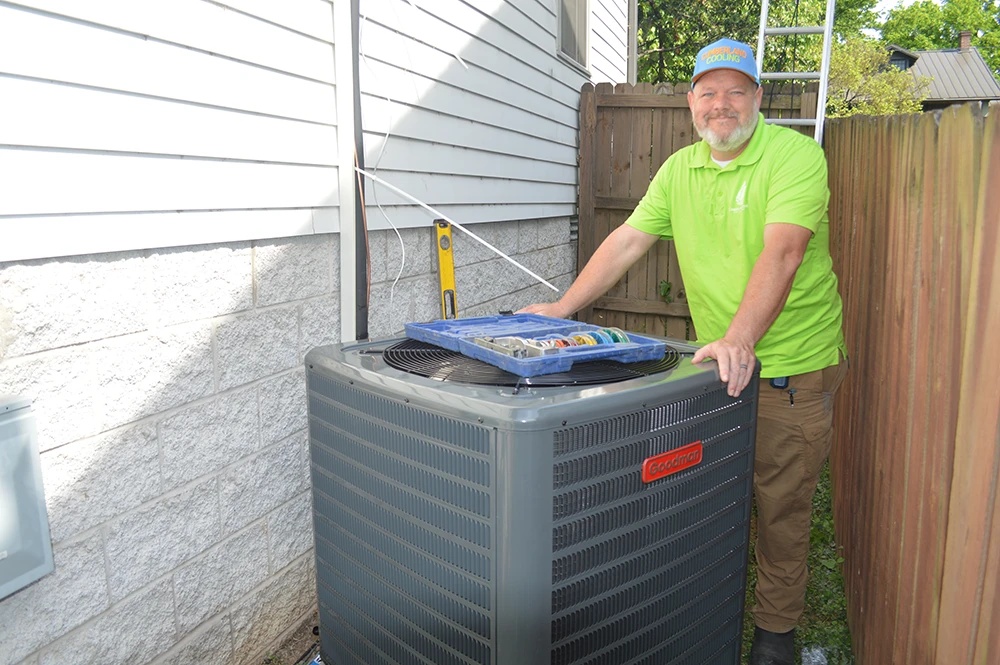
"Hey, it's me again. Yep, twice on the same page! I feel so important.
Your HVAC system doesn't need attention every day. But it does need attention at least twice a year. Kind of like those low-maintenance houseplants that are nearly impossible to kill, yet you managed to kill every single one.
If you want fewer surprises, lower bills, and a system that won't croak like a houseplant, start with good information and regular maintenance.”
- Dewey, Cumberland Cooling's comfort helper
Need Real Advice from Real Humans?
If you've read through this page and still have questions, that's normal. HVAC can get complicated fast.
Call Cumberland Cooling or request service online. We'll help you sort it out without pressure, upselling, or HVAC scare tactics.
We proudly serve East Nashville, including 37206, 37216, 37207, 37115, and 37116.